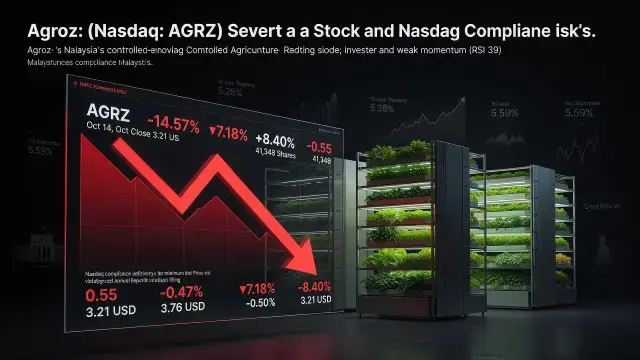
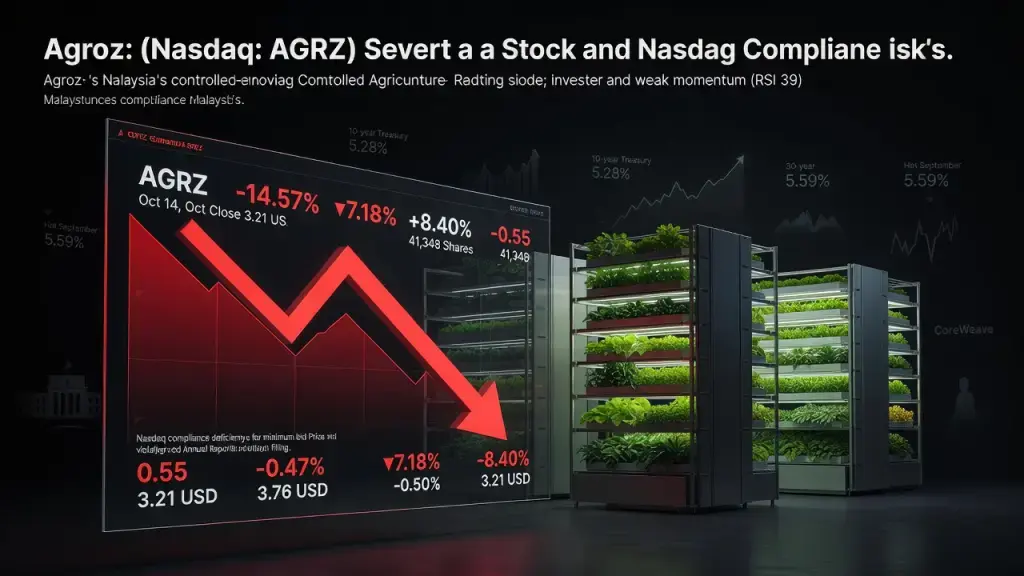
Agroz, the Malaysia-based vertical farming and AgTech company trading on Nasdaq under AGRZ, dropped 14.57% to close at USD 3.21 on October 14. The stock gapped down 7.18% at the open and fell another 8.40% during the session, on volume of just 41,348 shares. No company filing or wire release dated that day explains the move, which points to thin-volume trading in a stock already carrying Nasdaq listing deficiencies.
A Small Float, a Big Swing
Here's the math that matters: with a market value near USD 9 million, Agroz doesn't need much selling pressure to post a double-digit percentage loss. Implied prior close was roughly USD 3.76, putting the day's decline at about USD 0.55 a share. Volume ran at 0.1 times the stock's average at the time of the screen - an unfinished session, worth noting before drawing conclusions. The relative strength index sat at 39.0, labeled Down, a sign of weak momentum rather than a clear reversal signal. In a stock this thinly traded, a handful of trades can swing the price in either direction, which makes any single day's close an unreliable proxy for underlying value.
Listing Deficiencies Add a Layer of Risk
Agroz has received Nasdaq deficiency notices tied to its minimum bid price and its annual report filing. That combination raises the odds of a reverse stock split or further compliance notices, both of which tend to weigh on share price and investor confidence. On the operational side, the company has signed a supply agreement with Harvest Hive and was named to the Superbrands 2026 list - developments that speak to business activity but don't, on their own, resolve the listing issues. For a vertical farming operator trying to scale controlled-environment agriculture, maintaining exchange compliance is as much a capital-markets problem as an operational one; losing a Nasdaq listing would complicate financing at a moment when the company likely needs it most.
Macro Headwinds Compound the Pressure
Agroz's decline didn't happen in isolation. September CPI came in hotter than expected, pushing the 10-year Treasury yield to about 5.28% and the 30-year to roughly 5.59%. That has investors bracing for the possibility the Federal Reserve raises rates again at its October 27-28 meeting. Rate-sensitive, debt-funded growth names have taken the brunt of it - CoreWeave fell 13% as its bond yields spiked, prompting Elon Musk's one-word reaction, "Yikes," to a warning about the debt load. Bank of America slid after a money-laundering penalty topping USD 1.2 billion, while BlackRock rose on an earnings beat. Barclays downgraded Dell and Hewlett Packard Enterprise to Equal Weight after both stocks rallied sharply this year. Tech broadly wobbled on October 8 over OpenAI revenue concerns, with the Nasdaq 100 down 1.4% and the Philadelphia Semiconductor Index off 3.4%. Selling pressure right now is concentrated in AI infrastructure, bank earnings reactions, and thinly traded micro-caps - and Agroz falls squarely into that last category.
What to Watch Next
A one-day move like this can reverse just as easily as it can extend. The sensible approach is to wait for confirmation rather than read too much into a single session.
- Nasdaq compliance updates on the minimum bid price and annual report deficiencies
- Timing and content of the delayed annual report filing
- Any financing activity that could affect share count or capital structure
This is information only, not investment advice. Anyone tracking Agroz should check the underlying filings directly and treat volume and price figures as a snapshot of an unfinished trading session, not a settled conclusion.