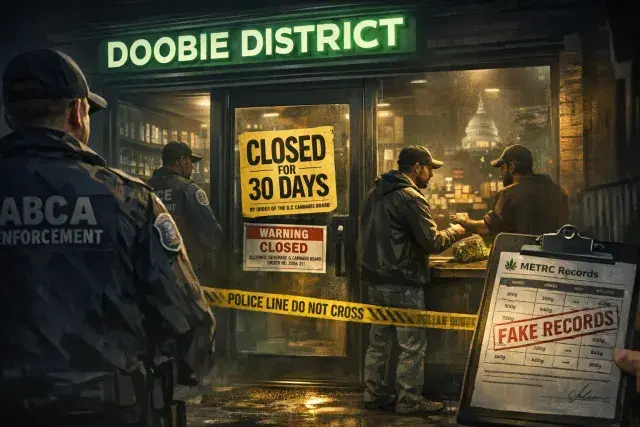
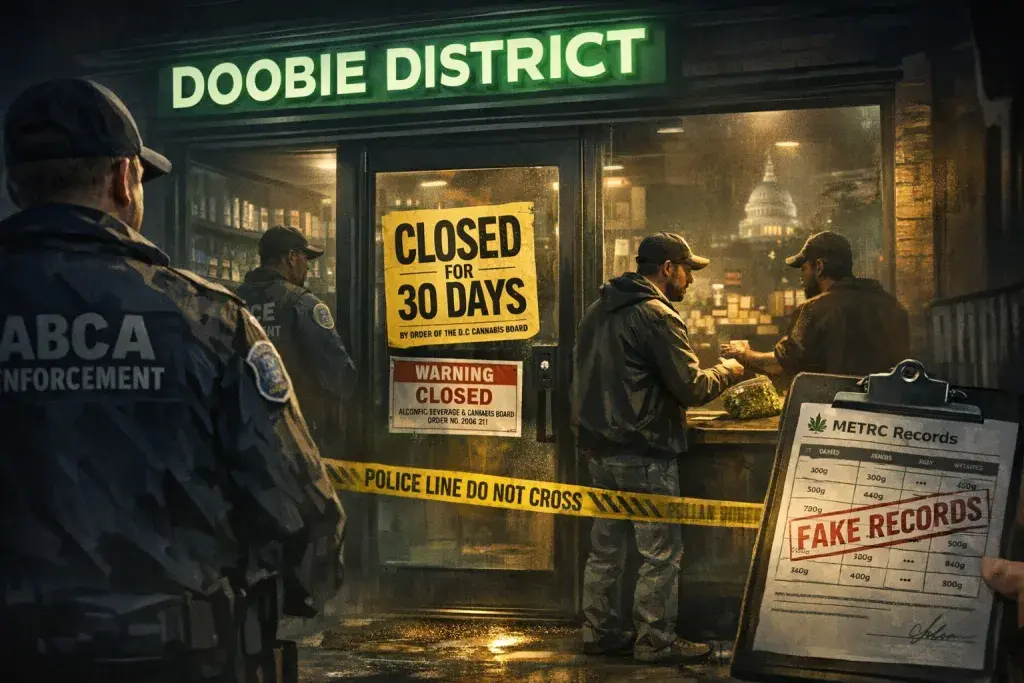
The District of Columbia Alcoholic Beverage and Cannabis Board has slapped a 30-day suspension on Doobie District, a medical cannabis retailer on U Street, for dispensing product to unqualified buyers and falsifying entries in the mandatory METRC tracking system. Issued February 11, 2026, as Order No. 2026-211, the penalty stems from undercover stings that exposed sloppy verification and data manipulation. This crackdown underscores the tight leash regulators keep on D.C.'s medical marijuana market—where patient protections clash with business pressures.
Undercover Buys Expose Verification Failures
An ABCA investigation kicked off May 9, 2025, after tips that Doobie District, at 1526 U Street NW, was selling medical cannabis without checking medical cards. Two controlled purchases by an undercover investigator confirmed it: staff handed over product—sourced from a licensed cultivator—without asking for ID or registration proof. The labels? They bore the name and patient ID of a Doobie District employee, not the buyer.
Digging deeper, an ABCA analyst spotted the employee's METRC account bloated beyond the District's 8-ounce, 30-day patient limit. Two other patient accounts showed similar "overselling" via the same login. METRC, the seed-to-sale software, demands real-time, truthful data to track every gram from farm to shelf; faking it erodes that chain.
Board Upholds Charges, Rejects Lighter Penalty
The Board nailed Doobie District on two counts: dispensing to non-qualified patients or caregivers, breaching 22-C DCMR § 5709.5, and logging false METRC data, violating § 5615.3. (An earlier notice misstated the first as § 5709.4—a renumbering hiccup from emergency rules.) Ownership stipulated to the facts but pushed back on the punishment.
At the show cause hearing, principal owner Peter Murillo owned the lapses. His firm fired the culprits, retrained staff, and added personal oversight—weekly sales checks to curb overselling. Fair enough. But the Board wasn't buying full absolution. Licensees answer for supervision, period. Revocation hovered as an option; they settled on suspension plus mandatory ABCA-approved training within 60 days. Miss that, and the doors stay shut longer.
Why These Violations Sting in D.C.'s Dual Market
D.C.'s cannabis scene splits medical and recreational tracks—medical demands verified patient status to shield a program born from compassion for the chronically ill. Seed-to-sale systems like METRC aren't bureaucracy for show; they prevent diversion to black markets, ensure dosing accuracy, and block underage access. One slip-up, like here, risks the whole supply chain.
What's striking: this isn't rogue chaos but targeted corner-cutting—employee accounts as proxies for sales. In practice, though, it funnels restricted product to tourists or recreational seekers, undercutting medical priorities. The Board's measured response signals tolerance limits amid D.C.'s push to normalize cannabis; negligent operators get reined in, but outright banishment waits for repeaters. Doobie District didn't respond to requests for comment.