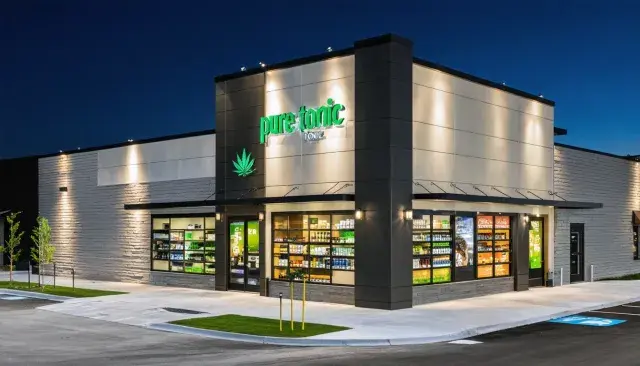
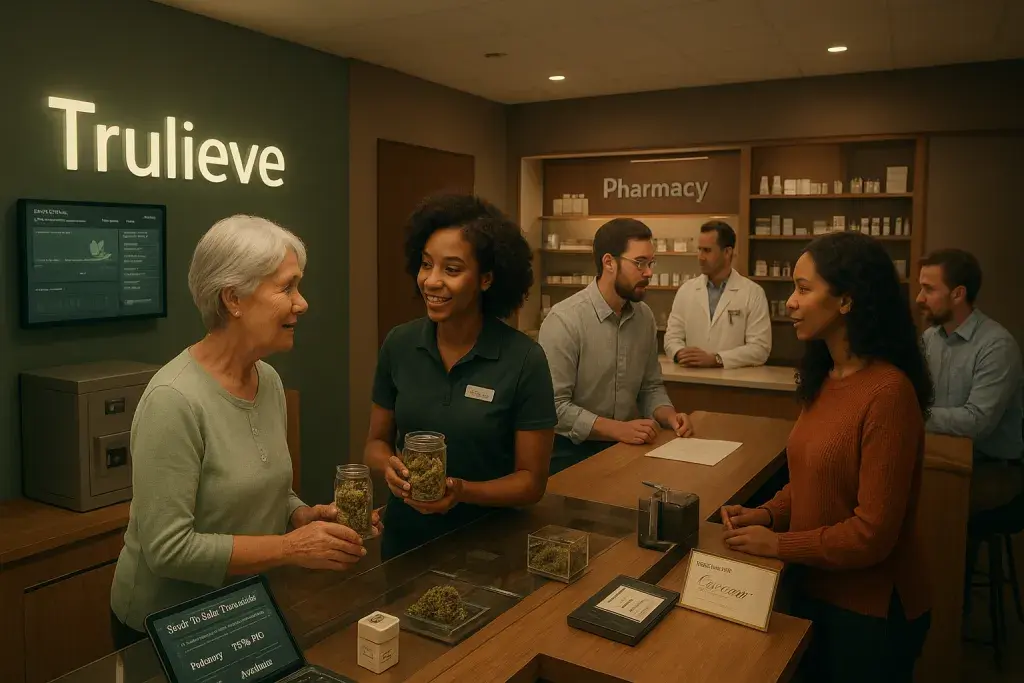
Georgia's medical cannabis program took a significant step forward this week when a Trulieve dispensary in Marietta conducted the state's first ceremonial sale of flower and vaporization products - product categories that had, until recently, been entirely off the table for Georgia patients. The occasion followed Governor Brian Kemp's signing of Senate Bill 220, known as the "Putting Georgia's Patients First Act," on May 12, 2026, a law that materially reshapes what licensed operators can stock, who qualifies for the program, and how products can reach patients across the state.
For dispensary operators and multi-state operators (MSOs) tracking program expansions, the Georgia development is worth examining closely - not just for the market access it creates, but for the structural model it establishes. SB 220 expands qualifying conditions to include lupus, HIV, and inflammatory bowel disease, and strips the "end-stage" restrictions that had previously capped access for patients living with cancer, multiple sclerosis, and Parkinson's disease. That kind of condition-list broadening typically drives meaningful patient registration growth, which in turn affects wholesale demand, SKU planning, and inventory management across the supply chain. Operators running point-of-sale systems in newer or expanding state markets - comparable, in terms of compliance architecture, to what a New Jersey dispensary POS platform must handle as that state's program scales - will recognize the operational ripple effects: new product categories mean new compliance workflows, updated menus, additional lab documentation, and revised compliant packaging requirements at the dispensary level.
What's striking here is the pharmacy distribution angle. Following federal rescheduling of medical marijuana to Schedule III in April, Georgia pharmacies holding both state licensure and DEA registration became eligible to sell medical cannabis products to qualified patients. Trulieve has already begun supplying more than a dozen independent pharmacies and has signaled plans to expand that distribution network through the summer. That's a meaningful channel shift. Independent pharmacies represent a retail footprint and patient trust profile that conventional dispensaries don't replicate - neighborhood-based, integrated into existing medication routines, staffed by licensed pharmacists who can contextualize cannabis products alongside a patient's broader pharmaceutical regimen. For an MSO like Trulieve, building a B2B wholesale relationship with pharmacy partners introduces a distinct set of operational considerations: delivery manifests, product batch documentation, chain-of-custody compliance, and wholesale pricing structures that differ from direct dispensary retail.
What SB 220 Actually Changes for Licensed Operators
The product expansion is the most immediate operational implication. Adding flower and vaporization products to a dispensary's menu isn't simply a matter of placing new SKUs on a shelf. Each new product category requires compliant packaging, accurate labeling with potency disclosures, certificates of analysis (COAs) from licensed testing labs, and proper storage conditions - all of which must be reflected in seed-to-sale tracking systems and point-of-sale records. Operators that had built their Georgia compliance infrastructure around a limited product set - tinctures, capsules, topicals - will need to expand those systems to accommodate inhalable products, which often carry additional handling and storage requirements under state rule.
The removal of "end-stage" condition restrictions is also operationally significant, if less visible. A broader eligible patient population means a more varied clinical profile walking through the dispensary door - or calling a pharmacy counter. That diversity in patient need generally increases the pressure on staff training and product knowledge at the retail level. Budroom staff and pharmacy technicians alike will need accurate, compliant information about the products they're dispensing, without crossing into medical advice territory. That line is genuinely difficult to walk in practice, and it's one that compliance-minded operators invest in continuously.
The Pharmacy Channel: A Distribution Model Worth Watching
The federal Schedule III rescheduling is what makes the pharmacy model legally operable in Georgia - and its implications extend well beyond one state. If pharmacies with DEA registration can carry medical cannabis products under a Schedule III framework, the distribution infrastructure for medical cannabis starts to look different at a national level. Operators in other states will be watching how Georgia's pharmacy rollout performs: whether patient adoption follows, how wholesale logistics hold up, and whether the pharmacy channel creates meaningful incremental revenue or primarily serves a patient segment that was already being reached through dispensaries.
For Trulieve specifically, the pharmacy partnerships represent a wholesale revenue stream that runs parallel to - rather than competing with - its own retail dispensary footprint. That's a meaningful structural distinction for an MSO managing vertical integration across multiple states. The wholesale margin profile differs from retail, the compliance burden is shared with the pharmacy licensee, and the brand exposure in a clinical setting carries different positioning considerations than a purpose-built dispensary environment. None of that is simple to execute. But for operators with established product lines and lab-verified supply chains, it's a channel that the new federal and state framework now makes accessible in ways it wasn't before.
Georgia's program expansion won't resolve the broader federal tensions that still define cannabis retail - 280E tax exposure for plant-touching businesses, banking access constraints, interstate commerce restrictions - but it does demonstrate that incremental state-level reform, when it aligns with federal scheduling movement, can open genuinely new operational territory for licensed operators. That's the actual story here.