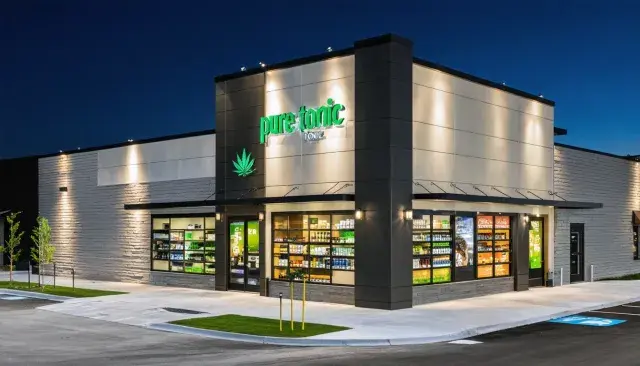

Georgia's medical cannabis program took a meaningful step forward this week when Trulieve opened flower and vaporization products for sale at its Marietta dispensary - the first such products legally available to qualified patients in the state. The milestone follows Governor Brian Kemp's signing of Senate Bill 220, dubbed the "Putting Georgia's Patients First Act," on May 12, 2026, a law that adds product categories, broadens qualifying conditions, and strips away restrictions that had long limited which patients could access the program at all. For multi-state operators and the broader medical cannabis supply chain, the expansion signals a maturing regulated market - one that now demands serious operational attention.
What's striking here is the pace at which Georgia's retail environment is now changing. Operators must simultaneously manage new SKU categories - whole flower and vaporization products hadn't existed on Georgia dispensary menus before - while extending distribution into independent pharmacies, a channel that carries its own compliance demands around DEA registration, pharmacist oversight, and product documentation. For any operator running a high-volume medical program across multiple store locations, that kind of rapid menu expansion puts real pressure on inventory management, point-of-sale configuration, and staff training. Systems built to handle a limited formulary of tinctures and RSO products now need to account for new intake procedures, compliant labeling requirements for flower and vaporization SKUs, and updated patient eligibility checks tied to revised qualifying conditions. Retail technology vendors that serve the cannabis sector - like IndicaOnline cannabis POS - understand that menu changes of this scope require more than just adding a product to a catalog; they require coordinated updates across compliance workflows, sales reporting, and age verification protocols.
The pharmacy distribution channel is genuinely new territory in the U.S. cannabis market, and Georgia is now among the first states where it becomes commercially real at scale. Following the federal rescheduling of cannabis to Schedule III in April, independent pharmacies holding state licensure and DEA registration became eligible to dispense medical cannabis products to qualified patients. Trulieve has already begun supplying more than a dozen pharmacies and expects that network to grow through the summer. From a wholesale and supply chain standpoint, that means a multistate operator is now running two parallel distribution channels - its own dispensary locations and third-party pharmacy accounts - each with different procurement relationships, cold-chain or storage considerations for flower products, and regulatory documentation requirements. That's a non-trivial operational lift, and it's one the broader industry will be watching closely as a potential model.
What SB 220 Actually Changed - And Why It Matters for Operators
Before SB 220, Georgia's medical program was narrow by most state standards. The qualifying conditions list excluded diagnoses like lupus, HIV, and inflammatory bowel disease. Perhaps more limiting was the "end-stage" language that applied to several conditions - including cancer, multiple sclerosis, and Parkinson's disease - meaning patients had to be at a terminal or near-terminal phase of illness to qualify. That's a structural barrier that kept the eligible patient population small and, by extension, suppressed retail volume. SB 220 removes that language and adds new qualifying conditions, which has two direct business implications: a larger potential patient base and a more diverse patient population whose needs may differ meaningfully from the program's earlier, narrower cohort. Operators should expect shifts in which product formats move fastest, which may require revisiting wholesale procurement volumes and dispensary floor sets accordingly.
The Pharmacy Channel Introduces New Compliance Obligations
Pharmacy distribution isn't simply a new sales channel - it's a fundamentally different compliance environment. Pharmacists operate under a distinct professional licensing framework, and their dispensing workflows are built around prescription drug protocols rather than cannabis retail procedures. Integrating medical cannabis into that environment means reconciling state cannabis regulations with DEA registration requirements, pharmacist counseling obligations, and the record-keeping standards that pharmacy operators are already accustomed to meeting for controlled substances. The retail experience will look different from a traditional dispensary budroom. Patients picking up medical cannabis at a neighborhood pharmacy will interact with a pharmacist - not a cannabis-trained sales associate - which places greater weight on product documentation, clear labeling, and accurate dosage information. For cannabis brands supplying that channel, compliant packaging and accessible COA documentation aren't optional details; they're table stakes.
Broader Signal for Multi-State Operators Watching Restrictive Markets
Georgia has historically been one of the more cautious medical cannabis states. The program existed on paper for years before meaningful patient access materialized, and product category restrictions kept the market thinner than its population size might suggest. The passage of SB 220 and the opening of flower and vaporization products is a reminder that restrictive programs do sometimes open - and when they do, operators already positioned in the market carry a real advantage in speed and distribution reach. The thing is, that advantage only holds if the operational infrastructure is actually ready: trained staff, updated compliance protocols, a POS system configured for the new product categories, and wholesale supply lines that can respond quickly. Operators who treated Georgia as a low-priority market during the restriction years may now find themselves scrambling to catch up. Those who stayed invested are in a position to move first.