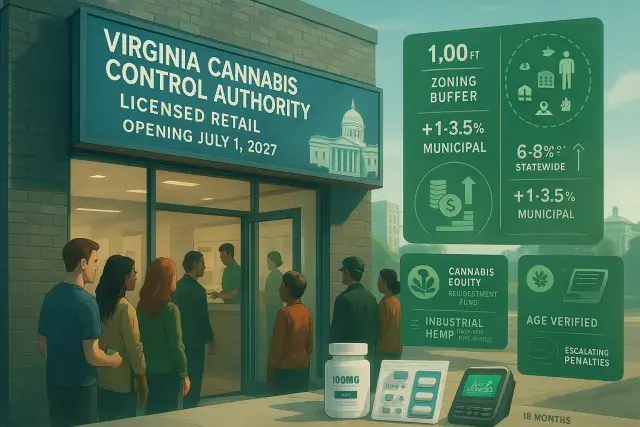
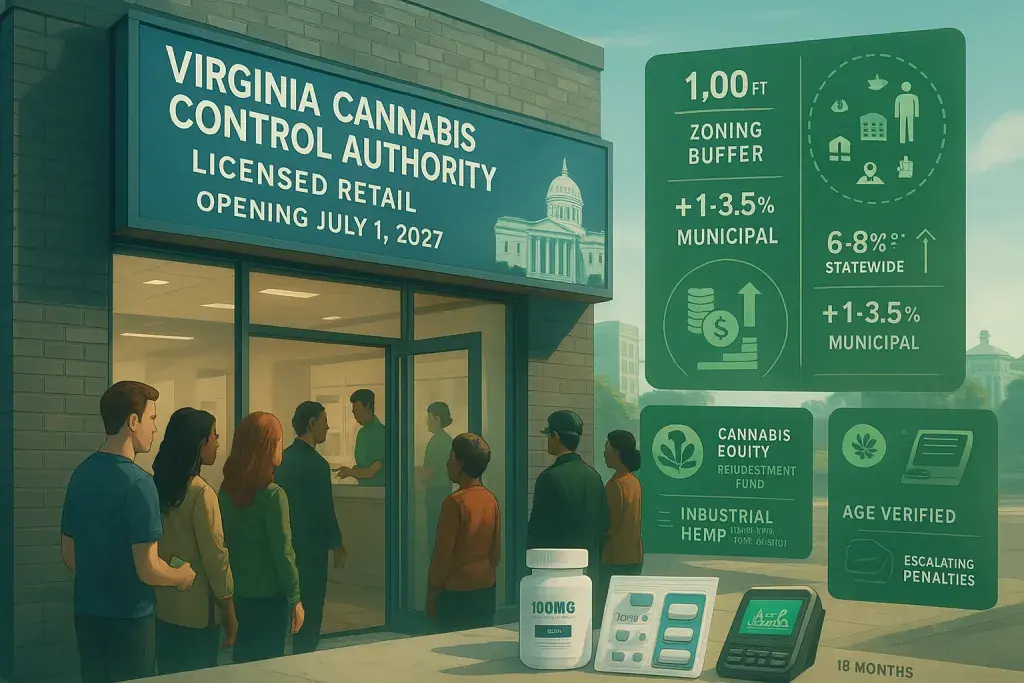
Virginia has locked in a hard date for recreational cannabis retail: July 1, 2027. The commonwealth's new biennial budget, which takes effect this week, establishes the regulatory and commercial architecture for a licensed adult-use market - setting possession limits, THC caps, tax rates, license counts, and the agency that will oversee it all. For operators, investors, and compliance professionals watching this state, the clock is now running.
The Virginia Cannabis Control Authority will begin accepting retail license applications on February 1, 2027, with a cap of 350 licenses statewide. That is a meaningful constraint in a state with a population of roughly 8.7 million, and it will shape competitive dynamics from day one. Operators in more mature regulated markets - including those tracking Alaska cannabis POS infrastructure and licensing rollouts - know well that early license caps tend to concentrate market share fast, creating pressure on applicants to have real estate, capital, and compliance infrastructure in place well before the application window opens. Existing medical marijuana licensees in Virginia can bypass the standard application queue by paying a $10 million conversion fee, a path that rewards vertical scale but effectively prices out smaller operators from that shortcut.
The tax structure deserves close attention. Sales will be taxed at 6% statewide through June 30, 2029, after which the rate rises to 8%. Local governments can layer on an additional 1% to 3.5%, which means total tax burdens could reach 11.5% in some jurisdictions. For comparison, states that opened adult-use markets with high combined tax rates - sometimes exceeding 20% or 25% - have documented persistent illicit market competition because regulated retail couldn't close the price gap. Virginia's phased, relatively moderate rate structure appears designed to give the legal market room to establish itself before tax pressure tightens. That said, dispensary operators will need to model their margin stacks carefully: excise tax, local tax, cost of goods, compliance overhead, and the $10 million conversion fee for medical operators are all variables that hit the P&L before a single transaction clears.
Packaging, Potency Caps, and the Compliance Burden on Retail Operations
The product rules built into this budget will require material operational changes for brands and dispensary buyers alike. Each package is capped at 100 milligrams of THC total, with individual servings limited to 10 milligrams per piece. Those numbers are consistent with what several other states have adopted - California, Colorado, and Illinois all use a 10-milligram serving standard - so multi-state operators and multistate brands will find the parameters familiar. What that means at the dispensary level, though, is tighter SKU management: buyers will need to audit wholesale menus against the potency caps before any product hits the budroom floor.
Compliant packaging is non-negotiable under the new rules. Child-resistant packaging is required, and products shaped like animals, fruits, vehicles, or humans are prohibited from sale. Cartoon advertising is banned. These are not unusual rules in regulated cannabis retail - they mirror restrictions in most adult-use states - but they require vendors and brands entering the Virginia market to review existing packaging and marketing assets before submitting product for licensing or wholesale placement. A brand that has been operating in, say, a state with looser packaging standards will need a Virginia-specific SKU configuration. That adds cost and lead time to market entry.
Social Equity, Regulatory Expansion, and What Operators Should Watch
The budget ties a portion of cannabis tax revenue to education, public health, substance abuse disorder programs, and the Cannabis Equity Reinvestment Fund - a mechanism established in 2021 to address disparities in communities historically affected by overpolicing. Social equity fund structures have become standard architecture in newer adult-use frameworks, and they carry practical implications: equity licensing provisions, reduced-fee application tiers, or priority processing windows often accompany them. Operators, especially those structuring equity partnerships or applying under any forthcoming equity tracks, should monitor the Cannabis Control Authority's rulemaking closely as the February 2027 application window approaches.
One regulatory expansion in the budget that hasn't drawn enough attention: the Cannabis Control Authority gains jurisdiction over industrial intoxicating hemp, currently handled by the Virginia Department of Agriculture and Consumer Services. That shift consolidates oversight of two overlapping product categories under a single agency - relevant for any operator or brand that sells hemp-derived cannabinoid products alongside traditional cannabis. Compliance reporting, testing standards, and labeling requirements that apply to cannabis retail may now extend to adjacent product lines. The operational implication is straightforward: retailers carrying both categories should expect unified regulatory scrutiny, not a fragmented one.
Retail Parameters, Zoning, and the Road to Opening Day
Stores must be located at least 1,000 feet from hospitals, schools, playgrounds, and rehabilitation facilities. That buffer is consistent with alcohol-adjacent zoning frameworks many municipalities have adopted for dispensaries, but it will significantly narrow viable real estate in dense urban areas. Operators eyeing markets in Richmond, Northern Virginia, or Virginia Beach will need to work with local zoning maps early - and account for the fact that local governments have taxation authority too, which means municipal relationships matter both for site selection and long-term operating cost.
On the consumer-facing enforcement side, the public consumption fine increases from $25 to $250 on July 1, 2027 - the same day retail opens. Dispensaries failing to verify customer age at the point of sale face escalating penalties up to and including license revocation. That's not a soft warning. Age verification compliance has to be baked into point-of-sale system configuration, staff training protocols, and compliance logs before the first legal transaction. Retailers that treat ID verification as a procedural afterthought rather than a documented, auditable process will find Virginia's enforcement framework unforgiving.
Eighteen months is not a long runway when capital deployment, real estate, licensing, vendor onboarding, POS system setup, staff hiring, and inventory planning all have to clear before the first customer walks through the door. Virginia's 2027 timeline is defined. Operators who begin infrastructure planning now will be the ones with a functioning store on July 2.