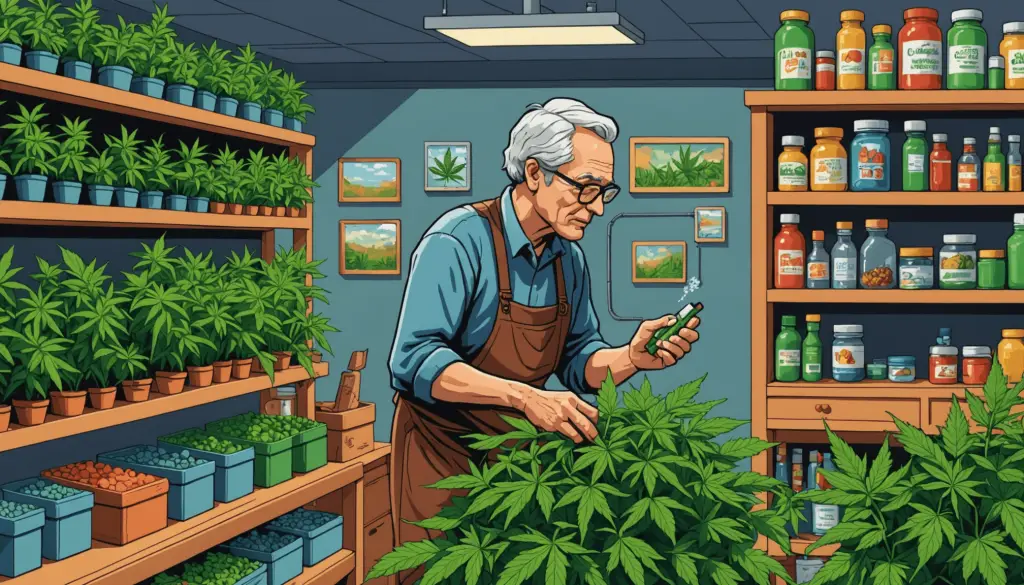
Michigan's cannabis industry has spent years drowning in its own supply. Production keeps climbing, wholesale prices keep falling, and margins for growers, processors and dispensaries keep getting squeezed. But a demographic shift may be quietly rewriting the demand side of that equation: Baby Boomers are consuming cannabis at record rates, and the dollars behind that trend are starting to look substantial.
Nationally, Baby Boomers accounted for roughly 12.6 percent of tracked cannabis spending during the 12 months ending in June 2026, according to cannabis market data attributed to Headset - trailing Millennials, Generation X and Generation Z, but far from a rounding error. Apply that share to Michigan's approximately $3.17 billion in 2025 cannabis sales and the state's Boomer segment comes out to roughly $399 million annually, an estimate rather than a state-reported figure, since Michigan's Cannabis Regulatory Agency doesn't break down sales by generation. For operators trying to model that opportunity at the store level - updating loyalty segmentation, adjusting SKU mixes for lower-dose products, or simply tracking which age cohorts are driving basket size - the back-end infrastructure matters as much as the marketing. Retailers exploring multi-state expansion have also been watching how platforms like marijuana pos missouri handle compliance reporting and demographic-adjacent purchasing data, since seed-to-sale systems increasingly double as the primary lens operators use to understand who's actually buying.
Why the Numbers Add Up Differently in Two States
Ohio complicates and reinforces the picture at once. Recreational sales exceeded $836 million in 2025, the state's first full calendar year of adult-use activity, and applying the same 12.6 percent national share produces an estimated $105 million in Boomer recreational spending - again, an estimate, not an Ohio-reported statistic. Add another roughly $233 million in medical marijuana sales, and the true older-consumer share may run higher, since medical programs historically skew toward patients managing chronic conditions rather than recreational buyers in their twenties. Put Michigan and Ohio together and the back-of-envelope math produces a combined Boomer cannabis market approaching half a billion dollars a year. That's not a small addressable segment for operators staring down thin margins and a new 24 percent wholesale tax in Michigan that took effect Jan. 1.
Different Customer, Different Product Mix
Here's the catch: selling to Boomers isn't just selling more flower to a new zip code. University of Michigan polling on healthy aging found older cannabis consumers are motivated overwhelmingly by relaxation, sleep support and pain relief rather than potency-chasing. That reshapes what a compliant, well-run dispensary should be stocking and how budtenders should be trained to talk about it - without drifting into unsupported medical claims, which remain a real compliance exposure for any retailer marketing THC or CBD products toward sleep, pain or mood.
- Lower-dose edibles, tinctures and topicals over high-potency flower or concentrates
- THC-CBD combination products rather than THC-maximized options
- In-store education for consumers returning to cannabis after decades away
- Clear COA access and lab-tested potency labeling for less experienced buyers
The Safety Conversation Retailers Can't Skip
Today's cannabis is not what Boomers remember from decades ago. University of Michigan polling found 83 percent of Michigan adults 50 and older agree potency has risen sharply, and older consumers are more likely to be on prescription medications, raising interaction concerns pharmacists and physicians - not budtenders - are best positioned to address. Among Michigan consumers 50 and older, 21 percent reported driving within two hours of using cannabis at least once in the previous year, and only 64 percent of regular users said they'd discussed cannabis use with a health care provider. That gap is where responsible retailing, clear packaging, and honest staff training matter more than any marketing campaign aimed at a graying customer base.