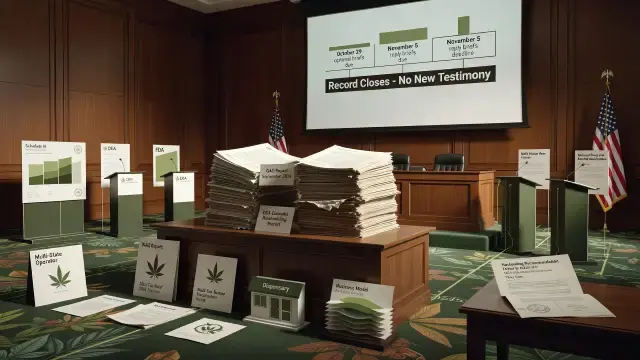
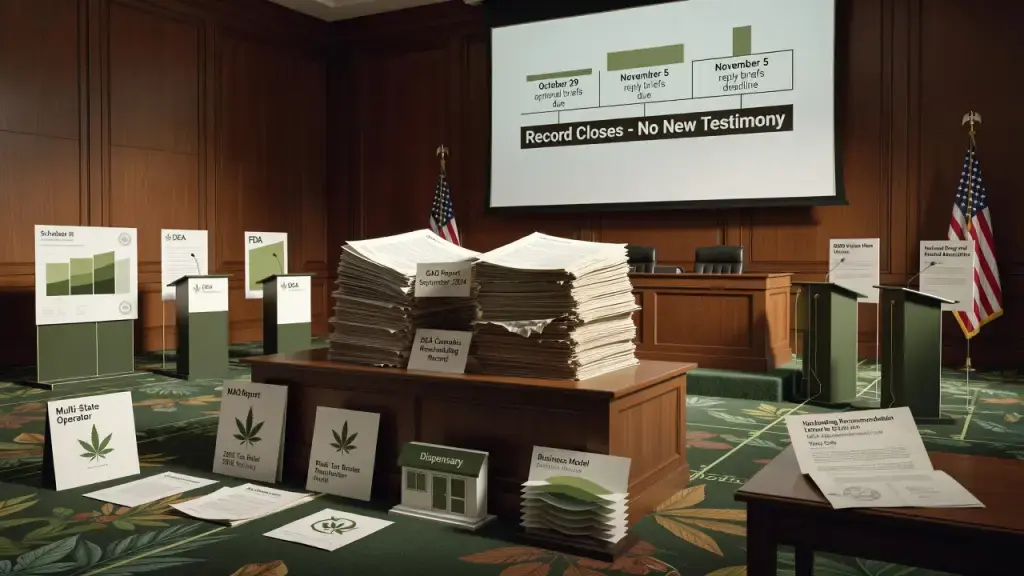
Operators waiting on a Schedule III decision have another date to circle: Nov. 5. That's when the DEA's rescheduling proceeding will finally have a complete written record, after Judge Derek C. Julius issued an Oct. 22 order that split the difference between the agency and a handful of prohibitionist intervenors. The upshot for the industry - multi-state operators, ancillary vendors, banks watching for a 280E fix - is more delay, though not the kind of delay that threatens to blow up the process entirely.
What the judge actually decided
Julius allowed a recent U.S. Government Accountability Office report into the administrative record, along with written arguments about what it means. What he didn't do is reopen the hearing itself. That distinction matters. Three anti-rescheduling parties - DUID Victim Voices, Dr. Kenneth Finn, and the National Drug and Alcohol Association - wanted new testimony and fresh document production built around the GAO's findings. Julius said no. The record stands as built: more than 2,500 pages of witness testimony from an 11-day hearing that wrapped July 15, plus thousands of pages of exhibits. Briefs on the GAO report's weight are due Oct. 29, replies by Nov. 5, and the judge made clear he doesn't want this dragging past that.
Why the GAO report became a flashpoint
The GAO's September report found gaps in how DEA documents its internal scheduling roles and procedures - not gaps in the scientific analysis behind the cannabis rescheduling proposal itself. That's a narrow finding, but the moving parties tried to stretch it into grounds for reopening cross-examination of FDA witness Dominic Chiapperino and digging into how the agency's two-part test for "currently accepted medical use" came together. The DEA pushed back hard, arguing the report is immaterial to the actual scheduling analysis. Julius landed closer to the agency's read, noting that the two sides aren't as far apart on what the report says as their court filings suggest - the fight is really about how much weight it deserves in this specific case, not what it means generally.
What gets decided when, and why operators should care
For dispensary operators and plant-touching businesses still filing under 280E, Schedule III reclassification remains the single biggest federal policy lever on the table - it would reshape tax treatment, banking access, and how the industry talks about compliance with federal law. But the mechanics here are a reminder that rescheduling isn't a switch anyone flips quickly. After reply briefs land Nov. 5, Julius still has to certify the record and send a nonbinding recommendation to DEA Administrator Terry Cole. Nonbinding is the operative word; Cole isn't required to follow it; and nothing here short-circuits further review or appeal once a recommendation does land.
- Record closes to new testimony - only briefing on the GAO report's weight remains open
- Oct. 29: optional briefs due from DEA and the seven anti-rescheduling parties
- Nov. 5: reply briefs due; further briefing after this date is "disfavored" per the judge
- Next step: Julius certifies the record and issues a nonbinding recommendation to the DEA Administrator
The compliance reality underneath the headlines
Whatever happens with Schedule III, state-level compliance obligations don't change in the meantime. Seed-to-sale tracking, lab testing and COA requirements, age-gated retail access, and compliant packaging rules remain fully in force regardless of where cannabis sits on the federal schedule. Operators building business plans around an anticipated reclassification should treat the timeline the way seasoned compliance teams treat any pending rule change - plan for it, don't bank on a date. The judge's own language - further delay "disfavored" - signals he wants this closed out, but a nonbinding recommendation to an agency administrator is still a long way from a final rule in the Federal Register.