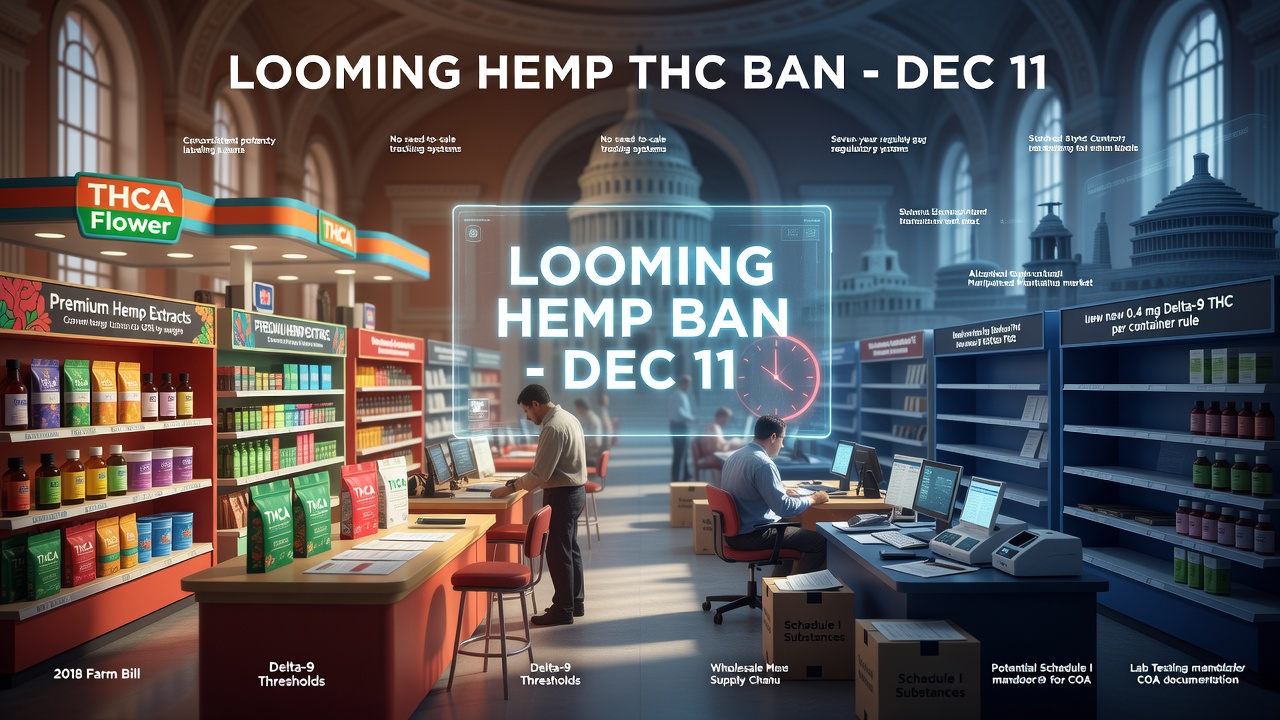
A federal ban on most intoxicating hemp products is set to take effect Dec. 11, threatening to wipe products off shelves at gas stations, bottle shops and dedicated hemp retailers across the country. With weeks remaining before the deadline, several bills in Congress are now racing to either delay the ban or replace it with an actual regulatory framework. Whether any of them move before the clock runs out is an open question.
A regulatory gap seven years in the making
The root problem traces back to the 2018 farm bill, which legalized hemp containing up to 0.3% Delta-9 THC by weight but never built out rules for what retailers could actually do with that allowance. That gap let the market improvise. Brands leaned on THCA - a cannabinoid that converts to Delta-9 THC when heated - to sell flower that tested compliant on paper but functioned, in practice, like marijuana. No seed-to-sale tracking, no mandatory lab testing regime, no consistent packaging standards. Just a loophole and a lot of entrepreneurial energy.
That lack of oversight is exactly what drew the attorneys general coalition's attention, and eventually Congress's. The new language tucked into a spending bill sets the threshold at 0.4 milligrams of Delta-9 THC per container - a number so low it would classify many CBD products, including ones with only trace THC, as Schedule I substances. For hemp retailers who built compliance programs around the old 0.3%-by-weight standard, that's not a small adjustment. It's a different industry entirely.
What the rollback bills are actually trying to do
The bills introduced so far split into two camps. Some aim simply to push back the effective date, buying the industry time to adjust supply chains, wholesale menus and inventory before enforcement begins. Others go further, proposing an actual federal regulatory structure for hemp cannabinoids - think testing requirements, potency caps and labeling standards closer to what state-licensed marijuana markets already operate under.
That distinction matters for anyone running a retail operation right now. A delay bill buys time but changes nothing structurally; operators would still face the same 0.4 milligram cliff eventually, just later. A framework bill, if it passed, could mean building out COA documentation, age-verification protocols and compliant packaging on a timeline set by federal regulators rather than scrambling reactively. Neither outcome is guaranteed, and the political coalition behind each differs - some lawmakers want hemp regulated like alcohol, others want it curtailed closer to zero.
What's at stake for retailers and suppliers
For stores that built wholesale relationships around hemp-derived THC products, the practical risk is immediate: inventory that's legal today could become a federal liability by mid-December. That affects everything from POS terminal programming to landlord lease terms that reference lawful products only, to payment processors that may pull support for merchants selling anything newly classified as Schedule I.
There's also a consumer-safety angle that shouldn't get lost in the policy fight. The unregulated hemp market's biggest criticism - inconsistent lab testing, unclear potency labeling, products indistinguishable from marijuana sold with little oversight - is precisely what prompted the crackdown. A federal framework bill, done carefully, could address those gaps without simply banning the category outright. A bare delay does not.
Operators would be wise to treat the Dec. 11 date as real until Congress proves otherwise, while watching closely which of these bills actually gains traction versus which are symbolic placeholders.
 LEEF Brands Pivots Into Flower Market Through Headwaters Alliance
 Illinois Hemp Ban Hits Some Retailers While Others Get a Reprieve
 Chicago Hemp Beverage Makers Scramble as Illinois Deadline Looms
 DEA's Federal Registration Rollout Leaves Dispensaries With More Questions
