Smart Approaches to Marijuana and its affiliated advocacy arm, SAM Action, reported a combined $310,000 in federal lobbying activity for the first nine months of 2026, according to disclosures filed with Congress, including two submitted Monday, October 19. That figure marks a three-year high for the January-through-September stretch, and it signals that the organization's opposition to rescheduling, banking reform and hemp-derived intoxicants is not slowing down heading into the next legislative cycle.
Where the Money Goes, and Why It Matters to Operators
The $310,000 breaks down into $210,000 in direct lobbying expenses from SAM Action and $100,000 in fees paid to two outside firms representing Smart Approaches to Marijuana. That's a 1.6% increase over the $305,000 reported during the same period in 2025, and an 8.8% jump from the $285,000 logged in 2024. Modest growth, sure, but steady growth - and steady is the operative word here. SAM Action's own reported spending has climbed in both comparison years, while outside-firm fees have held roughly flat. For multi-state operators watching Washington for signs of movement on Schedule III or SAFE Banking, that consistency is itself a data point. A well-funded opposition group with a stable budget is not a group preparing to stand down.
The Tax Fight Behind the Scenes
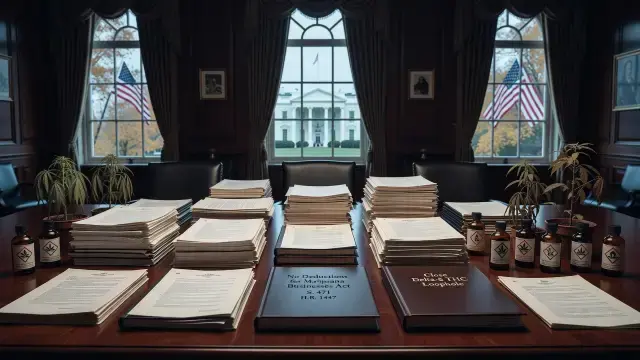
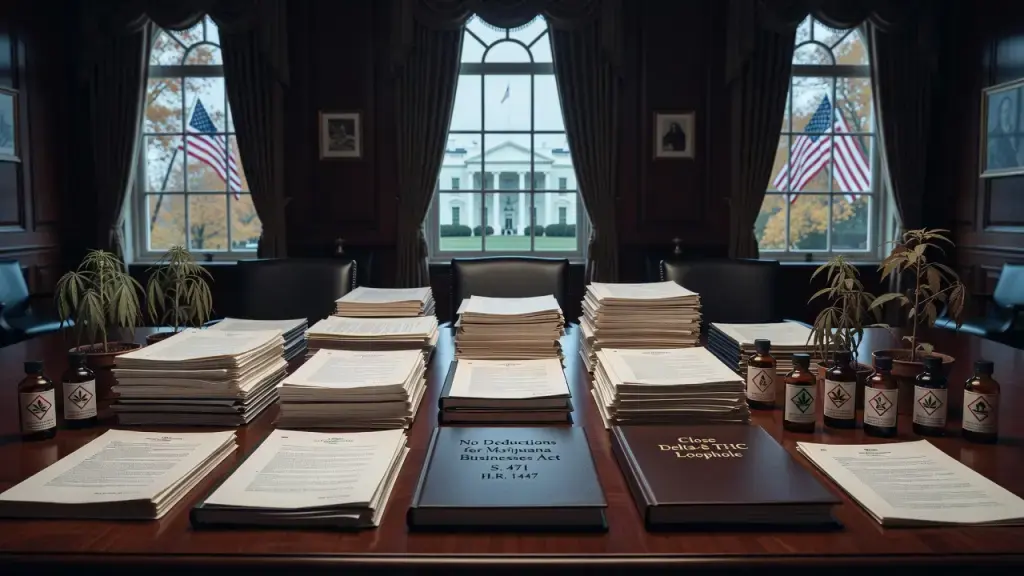
Buried in the filings is a detail that deserves more attention than it typically gets: SAM Action's push for the No Deductions for Marijuana Businesses Act, introduced as S. 471 and H.R. 1447. Under current law, Section 280E bars businesses trafficking in Schedule I or II substances from deducting ordinary expenses - payroll, rent, marketing, the works. Moving marijuana to Schedule III would normally lift that restriction, giving dispensaries and cultivators access to the same deductions any other small business takes for granted. This bill would close that door anyway, preserving the tax burden even if rescheduling goes through. For an industry already squeezed by thin margins, wholesale price compression and compliance overhead, that's not a technicality. It's the difference between rescheduling actually changing the balance sheet or just changing the paperwork. SAM Action listed the House, Senate and White House as targets on this one, which tells you it's being treated as a priority, not an afterthought.
Hemp, Kratom and the Expanding Agenda
The third-quarter disclosures also widen the group's scope. Off Hill Strategies, paid $20,000 by Smart Approaches to Marijuana in Q3, lobbied on closing what the filing calls the delta-8 THC loophole - the regulatory gap that lets hemp-derived intoxicants reach consumers with far less oversight than state-licensed adult-use products. Blue Mountain Strategies, paid $10,000 in the same period, worked banking legislation, the STATES Act and concerns about high-potency products. And for the first time this year, SAM Action's filing names support for a federal kratom ban, a new line item not present in the first two quarters.
None of this happens in isolation. Hemp-derived cannabinoids sold outside licensed dispensary channels have become a genuine compliance headache for state regulators, since they often bypass seed-to-sale tracking, lab testing and COA requirements that licensed operators must meet. SAM Action's framing treats that gap as a consumer-safety failure rather than a market opportunity, which puts it at odds with hemp retailers but gives it common ground, oddly enough, with licensed cannabis operators who've long complained about uneven enforcement.
What Operators Should Watch
- Continued opposition to SAFE Banking could keep cashless-payment friction and cash-handling risk in place for dispensaries another cycle.
- The 280E deduction fight matters even if rescheduling advances - tax relief is not guaranteed by Schedule III alone.
- Hemp-derived intoxicant restrictions could reshape wholesale menus and retail competition between licensed and unlicensed channels.
- Steady, well-funded opposition lobbying suggests federal reform timelines may stretch further than optimistic forecasts suggest.
In practice, though, the lobbying totals themselves are modest next to industry-side spending. What they reveal is intent and persistence rather than financial muscle. For compliance teams and government-affairs staff at licensed operators, the real takeaway is simple: the regulatory fight over rescheduling, banking and tax treatment is far from settled, and the opposition is not conserving its ammunition.