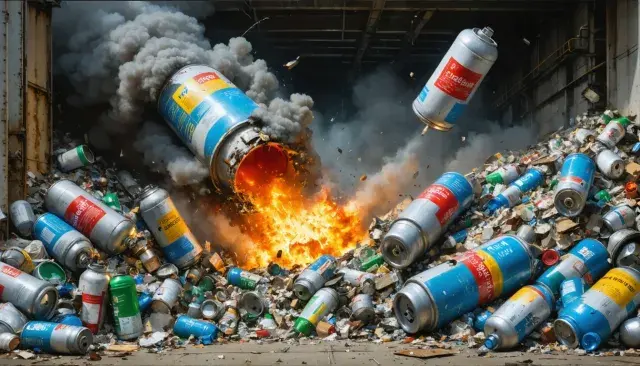
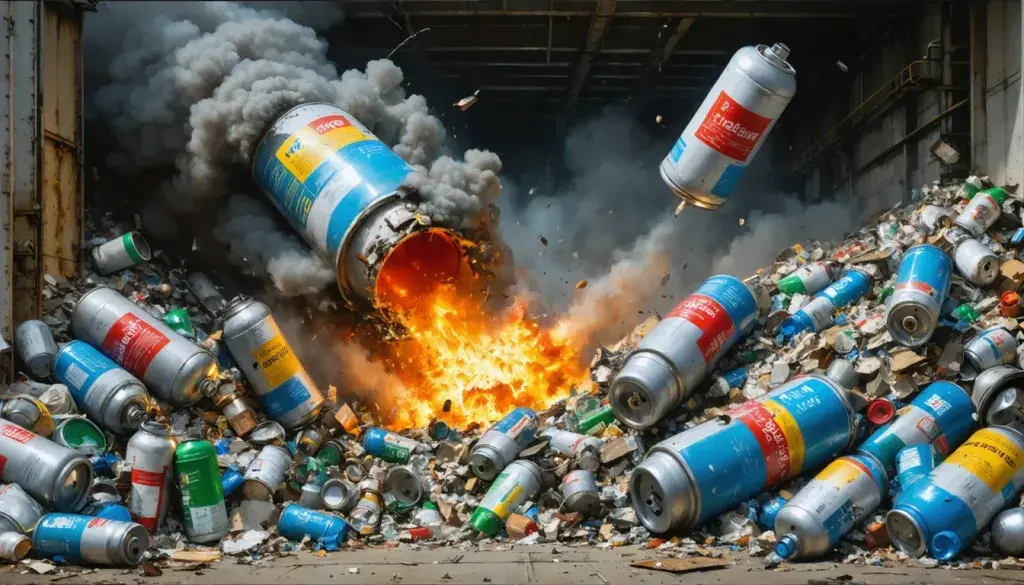
Pressurized nitrous oxide canisters dumped in household garbage are rupturing with explosive force inside Metro Vancouver's waste processing plants. These incidents damage vital equipment at the Burnaby Waste-to-Energy facility and expose workers to shrapnel, fire, and chemical hazards. Paul Henderson, Metro Vancouver’s General Manager of Solid Waste Services, reports the explosions cause significant productivity losses and downtime.
Dual Failure Mechanisms Threaten Operations
Small 8-gram whippets and larger three-litre cylinders withstand high internal pressure until waste compaction or heat intervenes. Mechanical forces in collection trucks or transfer stations breach the metal shells, triggering violent ruptures. At the incinerator, thermal expansion proves deadlier: compressed gas surges under intense heat, bursting containers and sending shrapnel through conveyors and shredders. Metro Vancouver documented 21 such explosions in one 24-hour period, halting operations and underscoring the peril to personnel.
Rise from Culinary Tool to Waste Hazard
Marketed as whipped cream chargers, these cylinders gain notoriety through recreational inhalation as "laughing gas." Safety data sheets warn of explosion risk if heated, yet compaction delivers equivalent percussive shock. Improper disposal persists despite the clear directive: pressurized vessels belong outside regular garbage streams. This surge strains a system designed for everyday refuse, amplifying risks in a region handling vast urban waste volumes.
Coordinated Fixes for Public and Infrastructure
Public campaigns must stress full depressurization—via intended dispensers for small units or open valves on larger ones—before any disposal. Retailers selling to recreational users need point-of-sale guidance on safe handling. Metro Vancouver depots accept emptied canisters with visible puncture or removed valves as scrap metal or household hazardous waste. Advocates push producer take-back mandates and AI-driven sorters that detect metal cylinders pre-incineration. Unified action shields workers, cuts costs, and sustains efficient waste management.