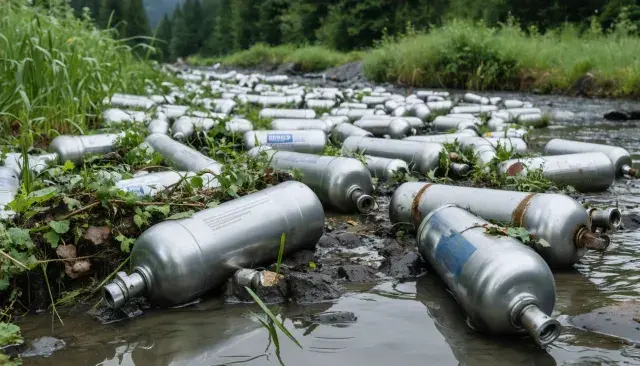
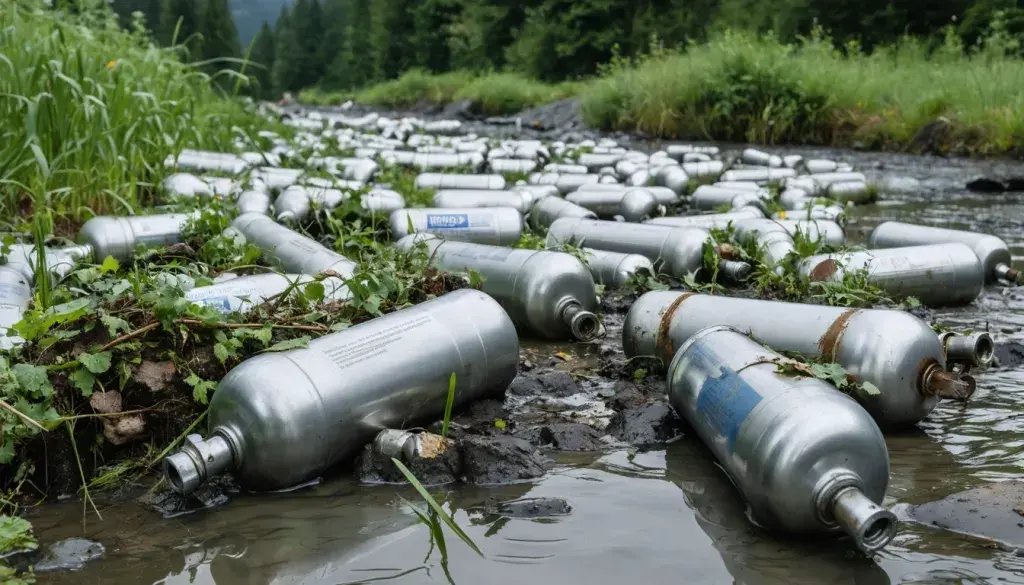
Discarded large nitrous oxide canisters are turning up in Langley ditches, creeks, and waste streams throughout Metro Vancouver, posing explosion risks to garbage trucks and recycling facilities. These three-litre cylinders, imported for illicit recreational use despite labels claiming whipped cream applications, retain dangerous pressure after partial depletion. Chris Allan, director of solid waste operations for the regional district, warns that such canisters threaten workers and equipment when crushed in compactors or incinerators.
Legitimate Uses Versus Illicit Imports
Nitrous oxide serves essential roles in food preparation and medicine. Restaurants rely on refillable containers for whipped cream dispensers, while individual users opt for small, single-use cylinders that fully depressurize after dispensing the gas. Once common as laughing gas for dental anaesthesia in the 20th century, the substance now draws recreational users seeking brief euphoric highs through inhalation.
Problems arise from oversized imports entering Canada, marketed misleadingly for culinary purposes. These non-refillable vessels hold about three litres and fail to vent completely, leaving residual pressure that persists even after heavy use. Roadside dumping and creek disposals compound the issue, as evidenced by a Langley homeowner who recently retrieved dozens from a local waterway.
Explosion Risks Imperil Waste Operations
Pressurized canisters detonate violently under mechanical stress. In garbage truck compactors, they rupture with force capable of damaging machinery and injuring operators. Similar blasts occur at the Waste-to-Energy facility in Burnaby or when forklifts puncture them at sorting centres.
Workers face direct hazards from shrapnel and sudden releases, while facilities endure repair costs and disruptions. Allan emphasizes that legitimate whipped cream chargers avoid these dangers through design, fully emptying before disposal. Illicit-scale cylinders evade such safeguards, amplifying risks across the regional waste system.
Recycling Drop-Offs and Calls for Import Controls
Metro Vancouver counters the crisis by accepting nitrous oxide canisters free at its recycling centres, where professionals safely vent and recycle the metal shells. Residents can locate sites by calling 604-732-9253 or visiting metrovancouverrecycles.org.
The regional district presses Health Canada for a nationwide import ban on these hazardous cylinders. Stricter controls would curb supply to recreational markets, protecting public safety and waste infrastructure from further incidents.