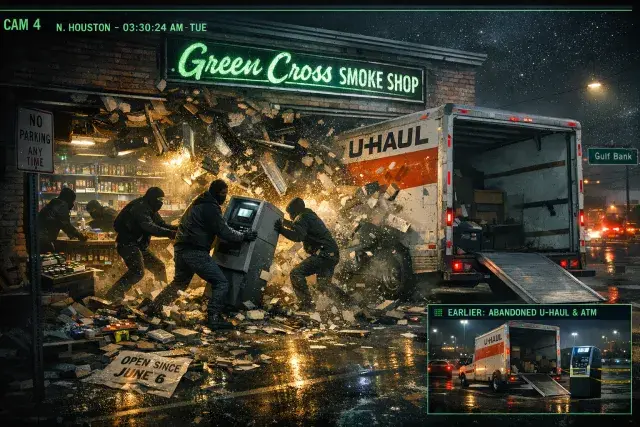
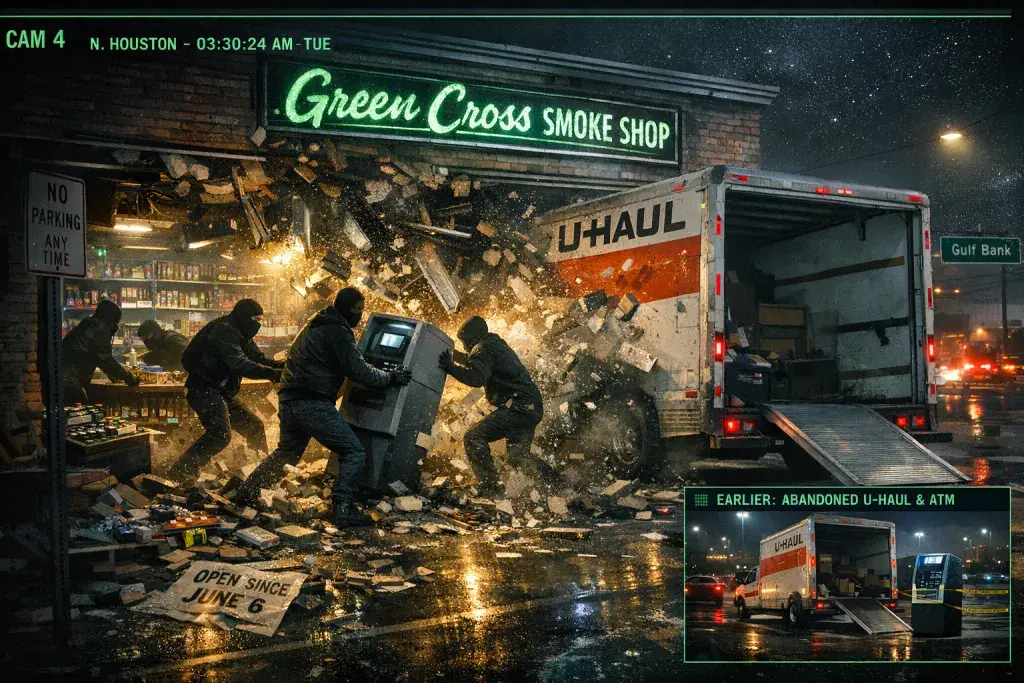
In the early hours of Tuesday around 3:30 a.m., a north Houston smoke shop on the North Freeway near Gulf Bank suffered a brazen burglary when thieves rammed a U-Haul truck through its front wall. Caught entirely on surveillance video, the extreme break-in highlights escalating risks for small retailers and leaves the uninsured owner facing steep recovery challenges.
The Coordinated Assault Unfolds
Video footage reveals the methodical nature of the crime: a driver repeatedly backed the U-Haul into the Green Cross smoke shop's facade, demolishing the structure in what owner Lou described as looking "like someone bombed the place." Six men then rushed inside, targeting the ATM and loading it into the truck before fleeing. The shop, open only since June 6, underscores how new businesses remain vulnerable to such aggressive tactics.
- U-Haul abandoned with ATM at Greenspoint Mall, thieves unable to crack it open.
- Incident lasted mere minutes, showcasing high coordination.
- No arrests reported as of Wednesday, per Houston police.
Opportunistic Looting Compounds the Damage
Just 15 minutes later, two more individuals arrived, not to assist but to steal $7,500 in merchandise amid the chaos. Lou noted their failure to call authorities, instead exploiting the vulnerability. This secondary opportunism reflects a disturbing trend in smash-and-grab incidents where bystanders turn predators, amplifying losses for owners without insurance coverage—a common plight for startups facing premiums they can't yet afford.
Broader Risks for Urban Retailers and Safety Trends
Smoke shops have become prime targets nationwide due to cash-heavy operations and high-value inventory like vapes and tobacco, with FBI data showing a 20% rise in commercial burglaries in major cities post-pandemic. In Houston, similar U-Haul ramming raids have surged, straining police resources and eroding neighborhood trust. For Lou, repairs fall to the landlord while he pivots to walk-up sales through a hole in the wall, embodying small business resilience amid urban crime waves driven by economic pressures and lax enforcement. Enhanced surveillance and rapid response teams could mitigate these threats, urging policymakers to prioritize retail security funding.